Blog

  •  


    Hi everyone,

    Another news story that shows there are no laws stringent enough to stop these thieves. When will we learn?

    Hackers break into thousands of security cameras, exposing Tesla, jails, hospitals. By: None. A group of hackers say they breached a massive trove of security-camera data collected by Silicon Valley startup Verkada Inc., gaining access to live feeds of 150,000 surveillance cameras inside hospitals, companies, police departments, prisons and schools.. Companies whose footage was exposed include carmaker Tesla Inc. and software provider Cloudflare Inc. In addition, hackers were able to view video from inside women’s health clinics, psychiatric hospitals and the offices of Verkada itself. Some of the cameras, including in hospitals, use facial-recognition technology to identify and categorize people captured on the footage. The hackers say they also have access to the full video archive of all Verkada customers.. In a video seen by Bloomberg, a Verkada camera inside Florida hospital Halifax Health showed what appeared to be eight hospital staffers tackling a man and pinning him to a bed. Halifax Health is featured on Verkada’s public-facing website in a case study entitled: “How a Florida Healthcare Provider Easily Updated and Deployed a Scalable HIPAA Compliant Security System.”. Another video, shot inside a Tesla warehouse in Shanghai, shows workers on an assembly line. The hackers said they obtained access to 222 cameras in Tesla factories and warehouses.. The data breach was carried out by an international hacker collective and intended to show the pervasiveness of video surveillance and the ease with which systems could be broken into, said Tillie Kottmann, one of the hackers who claimed credit for breaching San Mateo, California-based Verkada. Kottmann, who uses they/them pronouns, previously claimed credit for hacking chipmaker Intel Corp. and carmaker Nissan Motor Co. Kottmann said their reasons for hacking are “lots of curiosity, fighting for freedom of information and against intellectual property, a huge dose of anti-capitalism, a hint of anarchism – and it’s also just too much fun not to do it.”. “We have disabled all internal administrator accounts to prevent any unauthorized access,” a Verkada representative said in a statement. “Our internal security team and external security firm are investigating the scale and scope of this potential issue.”. A person with knowledge of the matter said Verkada’s chief information security officer, an internal team and an external security firm are investigating the incident. The company is working to notify customers and set up a support line to address questions, said the person, who requested anonymity to discuss an ongoing investigation.. Representatives of Tesla, Cloudflare and other companies identified in this story didn’t immediately respond to requests for comment. Representatives of the jails, hospitals and schools named in this article either declined to comment or didn’t immediately respond to requests for comment.. A video seen by Bloomberg shows officers in a police station in Stoughton, Massachusetts, questioning a man in handcuffs. The hackers say they also gained access to the security cameras of Sandy Hook Elementary School in Newtown, Connecticut, where a gunman killed more than 20 people in 2012.. Also available to the hackers were 330 security cameras inside the Madison County Jail in Huntsville, Alabama. Verkada offers a feature called “People Analytics,” which lets a customer “search and filter based on many different attributes, including gender traits, clothing color, and even a person’s face,” according to a Verkada blog post. Images seen by Bloomberg show that the cameras inside the jail, some of which are hidden inside vents, thermostats and defibrillators, track inmates and correctional staff using the facial-recognition technology. The hackers say they were able to access live feeds and archived video, in some cases including audio, of interviews between police officers and criminal suspects, all in the high-definition resolution known as 4K.. Kottmann said their group was able to obtain “root” access on the cameras, meaning they could use the cameras to execute their own code. That access could, in some instances, allow them to pivot and obtain access to the broader corporate network of Verkada’s customers, or hijack the cameras and use them as a platform to launch future hacks. Obtaining this degree of access to the camera didn’t require any additional hacking, as it was a built-in feature, Kottmann said.. The hackers’ methods were unsophisticated: they gained access to Verkada through a “Super Admin” account, allowing them to peer into the cameras of all of its customers. Kottmann says they found a user name and password for an administrator account publicly exposed on the internet. After Bloomberg contacted Verkada, the hackers lost access to the video feeds and archives, Kottmann said.. The hackers say they were able to peer into multiple locations of the luxury gym chain Equinox. At Wadley Regional Medical Center, a hospital in Texarkana, Texas, hackers say they looked through Verkada cameras pointed at nine ICU beds. Hackers also say they watched cameras at Tempe St. Luke’s Hospital, in Arizona, and were also able to see a detailed record of who used Verkada access control cards to open certain doors, and when they did so. A representative of Wadley declined to comment.. The hack “exposes just how broadly we’re being surveilled, and how little care is put into at least securing the platforms used to do so, pursuing nothing but profit,” Kottmann said. “It’s just wild how I can just see the things we always knew are happening, but we never got to see. Kottman said they gained access to Verkada’s system on Monday morning.. Verkada, founded in 2016, sells security cameras that customers can access and manage through the web. In January 2020, it raised $80 million in venture capital funding, valuing the company at $1.6 billion. Among the investors was Sequoia Capital, one of Silicon Valley’s oldest firms.. Kottmann calls the hacking collective “Advanced Persistent Threat 69420,” a light-hearted reference to the designations cybersecurity firms give to state sponsored hacking groups and criminal cybergangs.. In October 2020, Verkada fired three employees after reports surfaced that workers had used its cameras to take pictures of female colleagues inside the Verkada office and make sexually explicit jokes about them. Verkada CEO Filip Kaliszan said in a statement to Vice at the time that the company “terminated the three individuals who instigated this incident, engaged in egregious behavior targeting coworkers, or neglected to report the behavior despite their obligations as managers.”. Kottmann said they were able to download the entire list of thousands of Verkada customers, as well as the company’s balance sheet, which lists assets and liabilities. As a closely held company, Verkada does not publish its financial statements. Kottman said hackers watched through the camera of a Verkada employee who had set one of the cameras up inside his home. One of the saved clips from the camera shows the employee completing a puzzle with his family.. “If you are a company who has purchased this network of cameras and you are putting them in sensitive places, you may not have the expectation that in addition to being watched by your security team that there is some admin at the camera company who is also watching,” said Eva Galperin, director of cybersecurity at the Electronic Frontier Foundation, who was briefed on the breach by Bloomberg.. Inside Arizona’s Graham County detention facility, which has 17 cameras, videos are given titles by the center’s staff and saved to a Verkada account. One video, filmed in the “Commons Area,” is titled “ROUNDHOUSE KICK OOPSIE. A video filed inside the “Rear Cell Block” is called “SELLERS SNIFFING/KISSING WILLARD??? Another video, filmed inside “Drunk Tank Exterior” is titled “AUTUMN BUMPS HIS OWN HEAD. Two videos filmed from “Back Cell” are titled “STARE OFF – DONT BLINK! and “LANCASTER LOSES BLANKET.”. The hackers also obtained access to Verkada cameras in Cloudflare offices in San Francisco, Austin, London and New York. The cameras at Cloudflare’s headquarters rely on facial recognition, according to images seen by Bloomberg.. Security cameras and facial-recognition technology are often used inside corporate offices and factories to protect proprietary information and guard against an insider threat, said the EFF’s Galperin.. “There are many legitimate reasons to have surveillance inside of a company,” Galperin added. “The most important part is to have the informed consent of your employees. Usually this is done inside the employee handbook, which no one reads.”.

    …The hackers will keep on hacking as long as there are no consequences, and many rewards. Just saying…

    Wash hands and be safe, As Always,

    Deb
  • I drink water, do you?

    Hi everyone,

    I wrote about hacking of electric grids and infrastructure. Here we go… The following item was on Daily Tech headlines news this morning. I keep asking if anyone is taking this seriously.

    Please be safe,

    As always, wash hands and wear your mask.
    Deborah


    A shocking case of computer hacking has been uncovered in Pinellas County, Florida. Federal investigators are trying to hunt down the person who tried to poison a public water supply — remotely.

    © WTVT via NNS oldsmar-florida-water-treatment-plant-03.png

    Investigators say a plant operator monitoring the water plant in the Tampa Bay city of Oldsmar noticed breaches starting Friday morning.

    The hacker was controlling the computer system’s mouse — opening various functions on the screen and changing the sodium hydroxide in the water supply from about 100 parts per million to more than 11,100 parts per million.

    “This is obviously a significant and potentially dangerous increase,” Pinellas County Sheriff Bob Gualtieri said. “Sodium hydroxide, also known as lye, is the main ingredient in liquid drain cleaners.”

    If ingested in large amounts, sodium hydroxide can cause vomiting, chest and abdominal pain, according to the Centers for Disease Control.

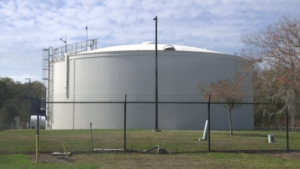
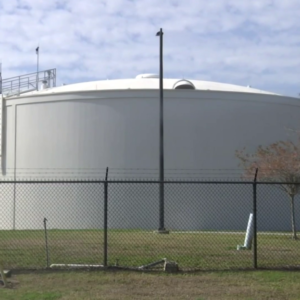
    © Provided by CBS News A look at a water tank at the Oldsmar, Florida, water treatment plant. / Credit: WTVT via NNS

    Fortunately, inside the water treatment plant the plant operator immediately reduced the levels back to what was safe.

    Now Secret Service and FBI cyber units are trying to determine who is behind the hack and whether it was someone in the U.S. or overseas. It occurred just two days before the Super Bowl in a city about 30 miles away from Raymond James Stadium.

    “But the important thing is to put everybody on notice … This is kind of bad. Actors are out there, it’s happening,” Oldsmar Mayor Eric Seidel said.

    Cyber experts warn that hackers have gotten into infrastructure before — but doing something dangerous — changes the calculus.

  • Happy New Year!

    Happy New Year everyone!  We’re still bogged down by this virus, and the hackers are loving it. A case in point is the following article, although a few months old, it is still holding true. So let’s make a New Year’s resolution to watch our accounts and to be diligent about giving out our personal information.

    U.S. Hospitals Cope With Looming Cyber-threats As COVID-19 Surges. By: Associated Press. BURLINGTON, Vt. 

    By late morning on Oct. 28, staff at the University of Vermont Medical Center noticed the hospital’s phone system wasn’t working. Then the internet went down, and the Burlington-based center’s technical infrastructure with it. Employees lost access to databases, digital health records, scheduling systems and other online tools they rely on for patient care. Administrators scrambled to keep the hospital operational – canceling non-urgent appointments, reverting to pen-and-paper record keeping and rerouting some critical care patients to nearby hospitals. In its main laboratory, which runs about 8,000 tests a day, employees printed or hand-wrote results and carried them across facilities to specialists. Outdated, internet-free technologies experienced a revival. “We went around and got every fax machine that we could,” said UVM Medical Center Chief Operating Officer Al Gobeille. The Vermont hospital had fallen prey to a cyberattack, becoming one of the most recent and visible examples of a wave of digital assaults taking U.S. health care providers hostage as COVID-19 cases surge nationwide.. The same day as UVM’s attack, the FBI and two federal agencies warned cybercriminals were ramping up efforts to steal data and disrupt services across the health care sector. By targeting providers with attacks that scramble and lock up data until victims pay a ransom, hackers can demand thousands or millions of dollars and wreak havoc until they’re paid. In September, for example, a ransomware attack paralyzed a chain of more than 250 U.S. hospitals and clinics. The resulting outages delayed emergency room care and forced staff to restore critical heart rate, blood pressure and oxygen level monitors with ethernet cabling.  A few weeks earlier, in Germany, a woman’s death became the first fatality believed to result from a ransomware attack. Earlier in October, facilities in Oregon, New York, Michigan, Wisconsin and California also fell prey to suspected ransomware attacks. Ransomware is also partly to blame for some of the nearly 700 private health information breaches, affecting about 46.6 million people and currently being investigated by the federal government. In the hands of a criminal, a single patient record – rich with details about a person’s finances, insurance and medical history – can sell for upward of $1,000 on the black market, experts say. Over the course of 2020, many hospitals postponed technology upgrades or cybersecurity training that would help protect them from the newest wave of attacks, said health care security expert Nick Culbertson. “The amount of chaos that’s just coming to a head here is a real threat,” he said. With COVID-19 infections and hospitalizations climbing nationwide, experts say health care providers are dangerously vulnerable to attacks on their ability to function efficiently and manage limited resources. Even a small technical disruption can quickly ripple out into patient care when a center’s capacity is stretched thin, said Vanderbilt University’s Eric Johnson, who studies the health impacts of cyberattacks. “November has been a month of escalating demands on hospitals,” he said. “There’s no room for error. From a hacker’s perspective, it’s perfect.” The day after the Oct. 28 cyberattack, 53-year-old Joel Bedard, of Jericho, arrived for a scheduled appointment at the Burlington hospital. He was able to get in, he said, because his fluid-draining treatment is not high-tech, and is something he’s gotten regularly as he waits for a liver transplant. “I got through, they took care of me, but man, everything is down,” Bedard said. He said he saw no other patients that day. Much of the medical staff idled, doing crossword puzzles and explaining they were forced to document everything by hand. “All the students and interns are, like, ‘How did this work back in the day?’ he said. Since the attack, the Burlington-based hospital network has referred all questions about its technical details to the FBI, which has refused to release any additional information, citing an ongoing criminal investigation. Officials don’t believe any patient suffered immediate harm, or that any personal patient information was compromised. But more than a month later, the hospital is still recovering. Some employees have been furloughed until they can return to their regular duties. Oncologists could not access older patient scans which could help them, for example, compare tumor size over time. And, until recently, emergency department clinicians could take X-rays of broken bones but couldn’t electronically send the images to radiologists at other sites in the health network. “We didn’t even have internet,” said Dr. Kristen DeStigter, chair of UVM Medical Center’s radiology department. Soldiers with the state’s National Guard cyber unit have helped hospital IT workers scour the programming code in hundreds of computers and other devices, line-by-line, to wipe any remaining malicious code that could re-infect the system. Many have been brought back online, but others were replaced entirely. Col. Christopher Evans said it’s the first time the unit, which was founded about 20 years ago, has been called upon to perform what the guard calls “a real-world” mission. “We have been training for this day for a very long time,” he said. It could be several more weeks before all the related damage is repaired and the systems are operating normally again, Gobeille said. “I don’t want to get peoples’ hopes up and be wrong,” he said. “Our folks have been working 24/7. They are getting closer and closer every day.” It will be a scramble for other health care providers to protect themselves against the growing threat of cyberattacks if they haven’t already, said data security expert Larry Ponemon. “It’s not like hospital systems need to do something new,” he said. “They just need to do what they should be doing anyway.” Current industry reports indicate health systems spend only 4% to 7% of their IT budget on cybersecurity, whereas other industries like banking or insurance spend three times as much. Research by Ponemon’s consulting firm shows only about 15% of health care organizations have adopted the technology, training and procedures necessary to manage and thwart the stream of cyberattacks they face on a regular basis. “The rest are out there flying with their head down. That number is unacceptable,” Ponemon said. “It’s a pitiful rate.” And it’s part of why cybercriminals have focused their attention on health care organizations – especially now, as hospitals across the country are coping with a surge of COVID-19 patients, he said. “We’re seeing true clinical impact,” said health care cybersecurity consultant Dan L. Dodson. “This is a call to arms.”

    Please be safe, as always wash your hands and wear your mask.
    With best wishes for 2021, Deborah


  • Giving Thanks: A Thanksgiving Poem

    Giving Thanks: A Thanksgiving Poem

    By Deborah E. Joyce


    Thanksgiving is over, I’m stuffed to the gills

    Ate here with the seniors, I’ve had my fill

    went to sleep early, up at four

    my body, tired, was very sore


    Went to the computer with pad and phone

    on Black Friday, I never leave home

    Avoiding the onslaught of shoppers in droves

    I brew the coffee, stay warm in my robe


    The dog ate my mattress, that’s the 1st stop

    Sleepy’ s.com is where I will shop

    coupons, rebates, I find them all

    presents to buy, most I recall


    Back to the bed, the budgets okay

    spent more on that mattress then anything today

    now it’s time to decorate-

    my Christmas party is at a close date


    Before you think this is all about shopping

    I’ll tell you a thought in my head that’s been bopping

    songs for birthday, Christmas, Easter you see

    not for Thanksgiving, how can that be?


    I hereby proclaim Thanksgiving the best

    far and above all the rest

    food, friends, camaraderie

    This means so much more to me


    Giving thanks for all the days

    abundance, joy in many ways

    my circle of people, I give you your due

    and thanks to you the whole year through

  • Save Your Money


    I’ve written a lot about identity theft, mainly because I was a victim. It’s easier to write about what you know. That’s how we learn. Storytelling in the past was of oral tradition. Written after the invention of an alphabet.

    Many times, the stories are funny. Sidesplitting laughter is a great teaching tool without being provocative. In my case, but I have to say isn’t so funny. I really, really wish I could relate a positive outcome. I can’t, but I want to share what happened to me with you, so that maybe you won’t suffer the losses that I’ve had to undergo.

    So, this is a story about moving out of state, also the mail. When I moved, I did what millions of people do every day – I made a contract with a well-known moving company in my area. The manager came to my home, looked at the items that I wanted moved, very upbeat. When I expressed my concern about the move, especially being blind, she said they would take extra good care of me. Nothing to worry about. I signed the contract, and bought extra insurance at her suggestion.

    Two young men showed up at my home to help me pack up my belongings. Their boss, the woman I met with previously, was tied up 3 hours away and couldn’t come. They assured me that she had gone over everything with them, it would be fine. Another woman I know was at my home helping me go through some stuff as well.

    When the movers were about ready to leave for the day, the woman remarked there were a few things left. “What about the pictures on the wall?” she asked. They said they didn’t know I wanted those moved. I told them I hadn’t removed some of them from the wall because I didn’t want them damaged while they were sitting on the floor. I had them walk around with me, and noticed they hadn’t packed a substantial number of other items. Again, they said they didn’t know I wanted that moved, either.

    Before leaving, I signed off on the paperwork. One of the guys said he had taken pictures of my items on his phone for me so that I would have a record of what was moved. I thanked him, and they left.

    My belongings still hadn’t arrived after 3 weeks. The moving company said they couldn’t understand it. I should call their affiliate in my new state. They never answered the phone. After going back-and-forth with the original company for another week, I finally reached the company at my new location. They said they had tried calling me multiple times and never received an answer. They called the number they were given by the manager at my original location. That’s how I found out they were given my old number in my old state.

    You might say that’s reasonable, but I had been talking with the original manager in the original company in my original state on my new telephone from my new location. It never occurred to me to tell her to give them that number…

    My belongings finally arrived. It took me a long time to go through everything. I started noticing that things were missing, but I kept assuming they were in that other box that I hadn’t opened yet. Besides, as a totally blind person, I could easily overlook items. However, many large items were missing, including a 16 x 20 print that I loved. I had some other pictures, but that was the only one of that size. I couldn’t have overlooked it,

    The mover did compensate me a little, nowhere near the replacement value of the items. Of course, the pictures that were on 1 of the mover’s phone had been deleted… I had no proof of anything.

    But I had insurance, right? Well, that’s the point of this whole story. I found out that insurance did not matter at all. I would have to prove the value of the items and the only way to do that was to have a receipt for the missing items. But how many of us retain a receipt for something we bought 10 or 20 years ago? And they don’t go by replacement value – that would be too logical. That item purchased 20 years ago would cost more to replace today. Or, if an antique, you have to prove it. What about a gift, or inherited piece of jewelry?

    It’s the same with any insurance. A tree hit the roof of my house many years ago. The insurance company paid a pittance of what a new roof would cost.  An act of nature, they said. I was lucky to get anything. When my car was hit on my front right bumper, the car insurance company said the same thing. The insurance company paid roughly half the cost of the damage. They said I was lucky the other driver had insurance, or I wouldn’t have gotten anything.

    Then there’s the hoops we have to go through in order to put a claim on health insurance. So, I’m starting to wonder why have any insurance at all? As I thought about it, and started tabulating the cost I was putting out in premiums every year, I realized the cost of those premiums far exceeded any reimbursement from the insurance company.

    So, I’d love to start this conversation. What has been your experience with insurance companies? I haven’t even mentioned those poor people affected by the wildfires in California, or the floods in the South. I hear that the insurance company says those are acts of nature, as well. Are we being set up? Think about it.

    If we’re lucky, and never have to submit a claim, should we get a discount? I know Allstate does something like that with their good driver discount. That’s only fair, insurance companies are making a huge profit, I hear.

    In addition, I had mailed many books through the post office. I used what they call mega mail, which is book rate, instead of priority mail which would’ve been expensive. I opened the last box of books a month ago. The box was all taped up so I had nothing to worry about, right? But books in there did not feel like mine. And it seems like some were missing. I was able to get a neighbor to help me look through the books. I was missing books of my childhood:  Bambi, My Friend Flicka, Lad a Dog, 1st editions and they were from my childhood. They were all replaced with textbooks on statistics, PowerPoint, Greece, with different names in each of the books. Obviously, not mine. The post office could do nothing – this was a new one, they said. And if I had bought insurance, it would not have done me any good. I would have no way to prove what books were in the box.

    Since my move, I’ve been lucky enough to find a great group of people. They have enrolled me in an immersion school, teaching me the skills I will need as a blind adult. The classes are daily, 5 days a week. I tell you this because I haven’t had enough time to answer your wonderful comments as I would like. But I will do the best I can.

    As always, be safe, wash your hands, and wear your mask.

    Deb

  • I Know Why

    I Know Why 
    Deborah E Joyce
    10/23/20


    I know why things are changing

    people crying, everyone complaining

    look around, what do you see?

    The need is great, yet people flee


    But things are not my fault, we say

    the someone to fix it is not “we”, but “they”

    Aren’t “they” the same as “we”?

    All under one family tree?


    The path to take must be together

    no matter what the kind of weather

    On this planet, we all had a part

    together, from the very start


    it’s not the planets fault it’s bleeding

    her beaches and coral reefs receding

    She doesn’t have much time, you know

    mother Earth, her hemisphere cannot grow


    yet, we ignore her, and also each other

    looting and killing each of our sisters and brothers

    This is all I can tell you, it comes from my heart

    this was my thought from the very start


    we have heaven above with the ground below

    let’s turn on our light and let each 1 glow

    I think I know why the sky is burning

    smoke inhaled has nostrils burning


    I remember when our skies were blue

    I know why everything is churning  – do you?


  • Responsibility? Who?


         Something is not adding up.  I remember my mother telling me that things were simpler in her day. Now, I’m saying the same thing about my childhood.  Each generation’s grandparents talk about the good old days. Things never seem to change.

         I don’t even want to watch the news anymore.  Everyone is on edge.  Between the coronavirus, the upcoming election, the economy, wildfires, and the like, it seems to me that were going around in circles and nothing is accomplished.  

         Should a police officer be held accountable when an innocent is gunned down? In August 2019, a homeless man living on the street was dragged by a rope around his neck by 2 police officers on horseback. They said it was justified because the man was loitering.  People are looting and burning down businesses, in the name of this or that. White supremacy. Black lives matter.
         
         I think all lives matter. I think were all important. I think the law should be the same for everyone. Have we become so jaded, so scared, that we stopped standing up for basic rights?

         Should businesses be held accountable for polluting our waters so badly, that fish mistake plastic for food? I just want to eat a fish, not a plastic soda bottle.

         Does my government have the right to spend $100 on a hammer? Or, is it my responsibility to vote the spendthrift out of office? Is it the government’s responsibility to keep me safe from an insidious virus? Or the drug companies?

         I lost my life savings as a victim of identity theft. The local DA said it was my fault. I am totally blind, and let the thief, who was my friend, help me write out a check to pay the lawnmower guy. I shouldn’t have trusted him to help me do that. He took my account number off the check, was able to get into my bank account online, and drained it. I should have trusted the lawnmower guy, who was a stranger.  So I wrote a book about it. It’s called “Identity Theft: A Victim’s Search for Justice” by Deborah E. Joyce.  When I researched my book, I came across story after story of people who were victimized by friends and family. They were seniors, disabled, recovering from surgery. One woman even stole her son’s life savings while he was in the Armed Forces with his unit fighting in Iraq.

         In the end, are we only responsible for ourselves? Our neighbor? Our country? Our planet?
    Does it ever end?

    Thanks for listening. As always, wash your hands, wear your mask, and remember to vote.
    Deb

  • Staying Safe on the Internet

    Hello out there,

    I hope everyone is staying safe.
    I received info about Internet security expert, Robert Siciliano, from my good friend Kevin. He has some great information on his website about keeping safe on the Internet, in the home, etc. If you go to his website, scroll around until you get to many hints that he had mentioned that you could read about. I’ve included a link to his website:

    https://safr.me/

    Scroll down to his blog. He mentions, among other things, how to check that the identity theft protection you just purchased is actually really identity theft protection and not just a label.

    Have fun scrolling through his informative blog.

    PS – no, I don’t know Mr. Siciliano, and am not making any money from getting his name out to you.

    My only goal is to keep all of us safe…

    Here’s a question – when was the last time you trained your computer to put all of that spam into your junk folder? This will help train your computer to put that spam where it belongs, in junk!

    Then you just highlight the whole junk list and delete it all at once. It’s time-consuming at 1st, but just like your dog, a trained computer has a happy owner.

    Enjoy the day,

    Deb


  • PUBLIC WI-FI IS CONVENIENT FOR YOU … AND FOR SCAMMERS

    \


    Hi everyone,

    I know many are home due to the virus. But I wanted to share this from AARP fraud watch, and hope you remain vigilant.

    Especially now, don’t let your guard down. This is just the scenario thieves love…

    As always, be safe, mask up and wash up.

    Deb Joyce


    Dear Deb,
    There’s nothing not to like about free public Wi-Fi. That is, if you don’t mind giving scammers easy access to all of your data.


    How It Works
    Scammers can set up an “evil twin” network — a Wi-Fi network that looks like the one you are expecting to use — hoping you’ll connect to it.
    Scammers can also set up a “man in the middle” attack to get between you and the Wi-Fi access point, in order to intercept your data. Once in, they look to steal passwords and other sensitive information from your device.
    They also set up fake Wi-Fi access points that require a credit card for you to connect to them. They then steal your credit card information.


    What You Should Know
    Public Wi-Fi networks are not secure if they don’t require a password to connect to them.
    It’s safer to use your service provider’s network rather than public Wi-Fi, even if it means incurring charges.


    What You Should Do
    Ask staff for the exact name of their establishment’s public Wi-Fi network. This way, you are sure you are connecting to it and not a look-alike.
    Limit your activity on public Wi-Fi to activities such as browsing news, sports and weather. Avoid doing anything that requires a username and password.
    If you are a frequent public Wi-Fi user, look into signing up for a virtual private network (VPN) to keep your data protected, even on unsecure public Wi-Fi networks.
     
    When it comes to fraud, vigilance is our number one weapon. You have the power to protect yourself and your loved ones from scams. Please share this alert with friends and family and visit the Fraud Watch Network.
    Sincerely,
    Kathy Stokes
    AARP Fraud Watch Network
    Are you active on social media? Do you enjoy sharing information that can help prevent friends and family from falling victim to scams? Become a volunteer AARP Fraud Watch Network (FWN) Digital Fraud Fighter! In exchange for simply sharing the same type of content with your friends and family that you already do, Digital Fraud Fighters will receive access to exclusive scam briefings plus a Welcome Packet, which includes a T-shirt, a copy of the FWN Con Artist’s Playbook, the FWN Watchdog Alert Handbook, and more. Interested? Send us a note at FWN@aarp.org for more information!


    Get Help
    To report a scam or for help if you or a loved one has fallen victim, contact the AARP Fraud Watch Network Helpline.
    CALL 877-908-3360
     
     
    Receive AARP Watchdog Mobile Alerts*
    Text “FWN” to 50757 to sign up.
    *By entering your mobile number, you are opting in to receive text messages from AARP to the number you provide. Your consent is not required as a condition to purchase goods/services. Message frequency varies by account. Message and data rates may apply. SMS Terms and Conditions: https://aarp.info/tcofr


  • Fresh Start


    Cable finally installed cable, net, phone. Then the work began. Calling agencies for service, i.e., guiding eyes for the blind, etc., scheduling appointments.

    Unpacking, patting around the closets trying to orient myself to spaces in this apartment.

    I make a mental map of what I put, and where, so I may find them again.

    It’s a surprise to find I can get groceries delivered for a nominal fee. It used to cost $30 to pay a friend to bring me to the store.

    I found new people with whom to connect. Virtual conferences, Zoom meetings, even the NFB convention, which I never attended before. One kind woman from my local support group paid for the one-year membership for me.

    I also found that NFB offers a free white cane to the blind, on a yearly basis. My cane is 10 years old…

    Support groups are a blessing. Experienced people out there are eager to share info. We have all been beginners at one point or another.

    To those of you who offered a helping hand to the new kid on the block, thank you very much. I look forward to returning the favor when we get past social distancing…

    I am also thankful to 2 wonderful supporters, Alix and Kevin, of my new enterprise: I wrote a book!!!
    I never thought I would do such a thing.

    But it was so important to me to try, alerting people to identity theft and the disastrous results it has on one’s life…

    Look for it on Amazon, “Identity Theft:  A Victim’s Search for Justice, by Deborah E. Joyce.

    I hope my effort keeps everyone’s identity, and bank account, safe. Don’t let it happen to you or your loved ones.

    Thanks for listening.
    Be safe,
    Deb